
100% Money Safe Guarantee

Discover India Tour

Pilgrimage India Tours

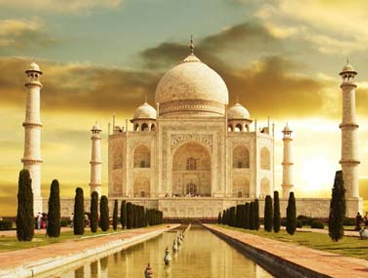
A big "Hello" from Imperial Journey. We welcome you to the wonderful and enchanting land - India! It's a great place to start your journey around India whether you wish to travel to South or North India. Imperial Journey is your young, energetic and dynamic travel partner based From New Delhi, India.


Get Multiple itlinearari- es & Personal Sugges- tion from our trip advi- sor specilists.
Read more
Imperial Journey help you in choosing the right destination for your purpose to visit - be it adventure, heritage or beaches - through our extensive range of itineraries. Imperial Journey offer fixed and customized India travel packages covering all the regions of world for tourists of every interest.

I love Rajasthan, Rajasthan's beautiful Pink City Jaipur, was the stronghold of a clan of rulers whose three hill forts and series of palaces in the city are important attractions.Known as the Pink City because of the colour of the stone used exclusively in the walled city, Jaipur's bazaars sell embroidered leather shoes, blue pottery, tie and dye scarves and other exotic wares. Western Rajasthan itself forms a convenient circuit, in the heart of the Thar desert which has shaped its history, lifestyles and architecture.

Himachal Pradesh is home to several hill stations.Situated on the River Beas, Manali is one of the most visited hill stations in Himachal Pradesh. Shimla in Himachal Pradesh boasts of old world charm and monuments. Chamba and Dharamshala in the upper reaches of the state of Himachal Pradesh are extremely popular with those seeking peace and quiet.
We help your dreams come to reality by providing matchless quality and service. Our Services simply do not end with mere package tours and travels. We take a step ahead in understanding your exact requirements and aiming to match them with the relevant services. Superior knowledge, Efficient Planning and the ability to anticipate and resolve potential problems along the way are some of the reasons behind our success. Bottom line being, we make your travel Fun, Safe, Economical, Informative, Comfortable & Memorable.


10000+ Traveler Used Imperial Journey Pvt Ltd Services, Larget’s Number of Guest 5/5 Feedback & Reviews. Our Strategic Business Units, also echo the quality and consistency of our group philosophy in their client handling across the subcontinent. Our biggest strength is our quality service. Each of the business units prides itself in providing professional travel services.
Imperial journey provide Air tickets, Internet booking agents and the online travel and booking agencies (OTAs) are the three main sources of obtaining the cheap air tickets, whether flying in the domestic or the international circuit. When you are planning to travel by air, getting the cheap air tickets is one of the prime considerations. Air tickets can make for a significant part of the travel expense and getting cheap flights tickets could mean saving quite a good sum of money.
IMPERIAL JOURNEY provides you a wide range of facilities, right from choosing your pickup point to your preferred choice, while in these are South India, Goa, Jammu/Kashmir, Uttarakhand, North East, etc. By availing our Rail Ticketing Services, travelers do not have to stand in long queues or do not have to run from one counter to another in order to get railway tickets. Through our Rail Ticketing Services, tourists can get Rail Tickets while sitting at home that too at specified time frame Tatkal , Normal ,AC-1 ,AC-2,AC-3 with confirm reservation.
IMPERIAL JOURNEY provides you a wide range of facilities, right from choosing your pickup point to your preferred choice of seat (for instance, luxury buses with sleeper berths). You can also choose from the widest range of available buses like Mercedes, Volvo, Volvo AC, AC luxury, Deluxe, Sleeper, Express and other private buses. The payment options are easier too- you can use either debit/credit card facility or net-banking. Not just that, in case of any change in your travel plan, bus tickets can be cancelled online.

Get the latest report about the project and company profile.
© Copyright 2016 All Rights Reserved by Imperial Journey Pvt. Ltd. | Design & Development by Creative Communication